Our recent study of the Astronomical Miracle of Joshua’s Long Day, in the context of Jon Nessle’s OT History Class [Session 15] has opened some of the in-depth ramifications of the events related to this Bible record, as presented by Rev. Nessle, Ren Manetti and myself. This blog, picks up where my teaching on Chapter 3, Session 15b left off in OT History Class; The Eclipse and the Great Pyramid. We will start this initial blog of 2023 with a brief review of our Nov. 2022 blog on Joshua’s Long Day, focusing on how the key Hebrew words for the Sun and Moon standing still [dom and amad] are in this context held figuratively as synonymous. In this Jan. 2023 blog, we will see more on how this relates to the Great Pyramid, along with Jesus as the King’s Son. We will begin with some related comments and word studies below for further study, on Josh. 10 & Hab. 3 from our previous blog for context, to see where that leads us…
Habakkuk 3:11:
The sun and moon stood still in their habitation; At the light of Your arrows they went,
At the shining of Your glittering spear.
“Sun and moon ‘stand still’ on high (ʿāmad zəbūlâ) / as Your arrows fly in brightness, Your flashing spear in brilliance.” The connection between this poetic source in the book of Habakkuk and the story of the miracle in the book of Joshua is clear and has been accepted by many interpreters throughout the ages.21 However, the syntax of the first line of the verse and the meaning of the word zəbūlâ posed major problems for them.22 Zəbūl in this verse is usually interpreted as the name of a sanctuary, throne, or platform for a god.23 The noun zəbūl appears four times in the Bible in addition to this passage in Habakkuk.24 In Isa 63:15, it clearly refers to a place high in the heavens where God usually dwells and from which He looks down on the earth. This is similar to one of the meanings of the Ugaritic term zbl; sometimes interpreted as the throne of a divine being in the heavens.25 The construction bêth zəbūl appears in Solomon’s speech at the temple’s dedication in 1 Kings 8:13 and its parallel in 2 Chr 6:2, 26 In this speech, scholars distinguish two parts: the first part, consisting of the opening two verses, 12–13, in which the construct bêth zəbūl appears; and the second, longer part, comprising the remainder of the speech from verse 14 to verse 53. 1
The authors continue with comments related to King Solomon’s building the first Temple to the true God, with the “additional words in the Greek text that constitute the first colon of a parallelism, with “The LORD has said that he would dwell in thick darkness” (v. 12) constituting the second cola. This extra line in the LXX–Septuagint includes added information that can contribute meaningfully to our topic, since it includes a reference to the sun: “Then Solomon said [concerning the house when he finished building it: He (the LORD) revealed the sun in the sky;] 28 the Lord has chosen to abide in thick clouds.” This shows that bêth zəbūl in the next verse corresponds to the place in the sky where the sun dwells. 2
Plate 1. Total Solar Eclipse North of Canaan on July 14th, 1405. 3

In our previous Nov. 2022 blog we presented evidence for the Miracle of Joshua’s Long Day as a Total Solar eclipse, specifically the solar eclipse of July 14th, 1405 BC, visible over Canaan. We will expand on this idea in this study, especially the idea linked to the Hebrew words for the “Sun and Moon ‘stand still’ on high (ʿāmad zəbūlâ) in Josh. 10:12 and Hab. 3:11. The comment above in reference to “Zəbūl in this verse usually interpreted as the name of a sanctuary, throne, or platform for a god,” is an idea we will expand on, in light of Scripture and Hebrew culture. In Jewish life, the Tabernacle and Temple embodied the center of their spiritual and social life activities. This sanctuary and Holy place where the people interacted with Priests and Prophets, that ministered to the Almighty in the Holy of Holies, responding to the oracles of God’s Covenant with Israel, also included the King, and whether or not his administration followed the godly ordinances, doing good or evil in God’s sight, fits with Zəbūl above being interpreted as the name of a sanctuary, throne, or platform for a god. What is interesting is the link to the Sun and Moon here, since the state of light or darkness was dependent on how the king ruled to uphold God’s Covenant for Israel.
It is interesting that Christ as the King of kings embodies the light of God as the apex of the royal line, and consummation of the kings of Israel in the Davidic Dynasty as the Lion of Judah. As Mal. 4:2 states “But unto you that fear My Name shall the Sun of Righteousness arise with healing in his wings… refers to Jesus Christ, who embodied more of God’s names than any other. In this light, we will investigate the references to the king’s coronation process, and their implications below, as found in the records in Kings & Chronicles.
This is consistent with a comparison of this verse to Josh 10:13: zəbūl in Hab 3:11 seems to parallel the “midheaven” (ḥaṣî haššāmayim) in Joshua.30 The second part of the speech expresses a clear underlying view that the earthly temple is not intended to be the dwelling place of God, but only the place where His name dwells.31 As explained in detail in the speech, people will pray to God facing the earthly temple in Jerusalem, and God will hear their prayer from His dwelling in heaven.32 The concept of zəbūl as a divine place in the heavens is found in a non-biblical scroll from Qumran in which “the holy zəbūl (of God)” is the place of the angels33 and the location from which the two great luminaries come. 4
Echoes of the view that the sun has a home are found in the Bible; See Ps 19:5–7. The root bwʾ, “come,” refers to the disappearance of the sun over the western horizon, and the root yṣʾ, “go out,” refers to its appearance in the east (Gen 19:23; Judg 5:31; Isa 13:10). That is also the “location” of the sun in Eccl 1:5, as rising and setting points on the Horizon. It may even be that gebūrātô, “its might,” in “the sun precisely, the entry of the sun god into his heavenly palace, means that the sun has gone dark. [under the earth at night] 5 This can also represent the collective temple of the Sun/Son of God moving on the ecliptic through the 12 Houses/Tribes/ Apostles of Israel as the head/apex and capstone of the Great Pyramid. [See Figs 1 & 3 below]
The word zebul/zebula is interpreted as the name of a sanctuary, throne, or platform for a god,
it is fitting Biblically that bêth zəbūl appears in Solomon’s speech at the Temple’s dedication in Jerusalem in 1 Kings 8:13, 27, 42. As a reflection and earthly representation of God’s true temple in Heaven, it embodies the physical and spiritual light of God, the Father of Lights for all Creation, the main two being the Sun and Moon. The interrelation between these primary two sources of light on earth is witnessed in the eclipse cycle, which is the subject of Joshua’s Long Day, also in Hab. 3:11. The Word study below includes the main related roots alongside dom, of amad H5975, 5976–amad,
5977–omed, and H5982-ammud. We will start with Scriptural references of amad H5975, as follows;
The word translated stand still in [Josh. 10:12-13, Hab. 3:11 is amad H5975– prime root to stand, lit./fig. trans & intrans. also abide, appoint, arise, cease, confirm, continue, dwell, endure, estab. leave, make ordain, be over, place, present one, raise up, remain, repair, set forth, settle over, settle up, stand; by, firm, fast, still, stay, tarry.] 31:17 ‘are these evils not on us because our God is not among us?’-as in our day… TODAY! Josh. 3:16- the waters of Jordan parted [stood up] so Israel could walk into the Promised Land. Josh. 11:13. A. To stand before a king, ie. serve, minister; Gen. 41:46,-Joseph serving Pharaoh as Grand Vizier. Deut. 1:38, Joshua, who stood before–served Moses with Caleb as the only two who entered the Promised Land, from the wilderness; I Kgs. 1:28, 10:8, Dan. 1:4-5, minister to Jehovah, used of Prophets, I Kgs. 17:1, 18:15, Jer. 15:19, Judg. 20:28, Ps. 134:1, a Psalm of Degrees. Levi. 18:23, a. Princes of the 12 tribes set over anyone-used of men; Gen. 24:30–31, 41:17, [in Pharoah’s dream interpreted by Joseph, He stood upon the riverbank…out of which came the 7 cattle] and inanimate things, Num. 7:2, b. confide in anyone, Stand by or defend one, as by Michael, the Archangel; Dan. 12:1-4, Esth. 8:11, 9:16. The Jews stood unified vs. Haman’s genocide plot. 2. to Stand For, Stand Firm, remain, endure; Stehen bleiben, Ps. 33:11, Jehovah’s decrees stand forever, Ps. 102:25-27, the heavens shall perish, but God remains, Ex. 18:23, Amos 2:15, Hos. 10:9, Esth. 3:4-6, Stand firm in battle before anyone. Josh. 21:44, there stood not a man of all their enemies before them. 23:9, Ecc. 4:12, Dan. 11:8, 15, 25. Persist, persevere in anything. Ecc. 8:3,
To be constituted, set, appointed, Ezr. 10:14, let our rulers be appointed.
To desist from anything, leave off, Gen. 29:35, 30:9. 4. To Stand up, arise, Dan. 12:1, 13, a new prince; AC, Dan. 8:23, 25, 11:2, 3, 20, Ecc. 4:15, of war springing up, 1 Chron. 20:4, rise up against anyone, Dan. 11:14, 1Chron. 21:1, Satan stood up against Israel to provoke David to do a census of the population. Levi. 19:16 No Talebearing! 5. Dan. 11:31. A/C in Antiochus‘ actions. Hiphil, a. Cause to stand, Ps. 31:9, Ezek. 33:26,-[take your stand leaning upon your swords, the posture taken by Necro–mancers waiting for the rites, of witchcraft. Isa. 47:12, marginal Bull-note]. Ezek. 13:5-7, False Prophets of Israel didn’t resist or stand firm. Ps. 76:8, 130:3; a Psalm of the degrees, 147:17, Nah. 1:6–8, [Nahum served c. 603 BC in Hezekiah’s 14th year of living the prophecy of the 15 years added to his life, prior to the eclipse over Nineveh preceding Jonah-possibly relating to Nah. v.8 darkness pursuing their enemies?
The sea becomes tranquil, Jon. 1:15, cp. 2 Kgs 4:6; miracle oil in the cruse endured for the widow. Levi. 14:11-20. Priest presented [caused to stand] the leper to be cleansed before the Lord @ the door of Tabernacle of Congregation, w/proper offerings for his cleansing & atonement. Fig. to decree, 2 Chron. 30:5, 33:8; to destine/promise anyone, impose a law on anyone, Neh. 10:33, Seat in office or function: 1 Kgs. 12:32, made priests of the lowest of the people. I Chron. 15:16. David speaks to the Chief Levites to appoint musicians like Asaph in the Temple service. 2. To cause to stand firm, establish, endure, preserve, 1 Kgs. 15:4, 2 Chron. 9:8, Prov. 29:4, to confirm; 2 Chron. 35:2, Dan. 11:14, confirm the vision by the event. 3. Stand Still, 2 Chron. 18:34, 4. Raise, to set up as idols; 2 Chron. 33:19, a house, Ezr. 2:68, 9:9, to repair the wall and house of the Lord. to arouse, stir up, Neh. 6:7, Dan. 11:11, 13. Hophal; to be set, placed, Levi 16:10, the goat on which the lot fell… to remain, 1 Kgs. 22:35.
2Kgs. 23:3, the king stood by a pillar in the 10 steps of his coronation at the entrance of the Temple. Ezek. 17:14, Keep, stand by the Covenant, Ex. 9:28-remain in same place, or state both people or things, Levi. 13:5, 37, Jer. 32:14, 48:11, Dan. 10:17, 11:6. Stay amongst the living, Ex. 21:21. 3. Stillstehn, stand Still, stop, 1 Sam. 20:38, used of the sun standing still in its course; Josh. 10:13, Deut. 31:15, God in the cloudy Pillar, appeared over the Tabernacle door. 31:17 ‘are these evils not on us as our God is not among us?’6
[5976–amad=shake, be at a stand.] Ezek. 29:7 thou have made all their loins to shake, cp. Ps. 69:23. The context of Ezek. 29:2-ff is Pharaoh of Egypt, the great dragon/crocodile of the Nile who invaded and captured Gaza, [Jer 47:1] Bullinger says Pharaoh Hophra called Apries by the Greeks, who also hit Zidon in assault and battled the Prince of Tyre on the Sea [Herodotus ii, 161, 169] cp. 2 Kgs. 24:7, Jer. 46:2, battle of Carchamesh 37:5-8. Egypt thus caused Jerusalem’s destruction. [Jer. 44:30, 46:25-26.] Ezek. 29:4 uses the same language here describing Leviathan in Job as Cetus the decan of the sea monster, and Rahab=Egypt in Isa. 51:9-16, 30:7, the strength of Egypt is to sit still. Ps. 74: 13-14. As Israel under Zedekiah relied on Egyptian support which faltered [Ezek. 29:6-7] making their loins to come to a standstill, shake or “be a stand“=this usage of [H5976–amad]. God divided the sea by His strength, breaking the heads of dragons in the waters, the heads of Leviathan in pieces… see Job 40-41, Hislop p. 293 talks of this Pharaoh as the embanker of the Nile. 7
In light of the astronomical meanings of the root ʿāmad (see below, section 4.2), if we read zəbūlâ in Hab. 3:11, as it is vocalized in the Masoretic Text,43 the verse can be understood in its plain sense, without any need for emendations: the moon in its orbit went—unexpectedly—into the orbit of the sun and made it go dark. With the little light that remained on the earth, the flying arrows and the heads of the spears appeared to the soldiers to shine like the glow of stars. As explained below (section 4.4), observers can distinguish both the sun and the moon covering it only during an annular solar eclipse.8 [or a total solar eclipse seen through the overcast skies that spawned the hailstorm of Josh. 10:11]
Thus, the aspect of darkness of dôm is directed primarily to the sun, which stopped shining in the middle of the day, while the aspect of cessation refers primarily to the moon, which appears as if it were “standing” in front of the sun, as explained in verse 13, “And the sun went dark/halted, And the moon stood (still).” Other scholars, beginning in the 1940s, arrived at the conclusion that the two verbs used in this description, dôm and ʿāmād, express an unexpected cessation of the sun’s illumination and not the sun’s halting in its heavenly orbit,55 a result arrived at by various Jewish commentators in the Middle Ages. The interpretation of the root dwm/dmm as a cessation of the sun’s illumination accords with one of the meanings of the root, which sometimes refers to the (usually sudden and unexpected) cessation of something from its natural, designated activity, as, for example, in Jer 47:6, in which the sword is asked to stop slaying, and in 1 Sam 14:9—in a parallel to ʿāmād, as in our verse—where it refers to non-participation in a battle.56 The same is true of ʿāmad, primarily with the preposition m-, as in Gen 30:9, where it refers to Leah’s ceasing
to bear children.57] 9
Later, J.F.A. Sawyer58 also interpreted the biblical description as a solar eclipse and suggested identifying it with the eclipse that occurred on September 30, 1131 BCE. He interpreted dôm as “stillness,” meaning that the sun ceased to shine. He explained the word ʿāmād and the clause “did not press, [or proceed] to set a whole day…10
[5977–omed=a spot as being fixed, stood upright, from [H5975]. 2 Chron. 34:31, a place, where one stands, as King Josiah stood on his platform, Dan. 8:17-18. 11 H5982-Ammud also occurs in I Kgs. 7:2, cloudy pillar, Ex. 33:9-10, God’s presence [v.14] in the cloudy pillar at the Tabernacle door to talk with Moses face-to-face, like the pillar of fire at night in [Ex. 13:22, 40:34-38]. Also used of pillars of heaven in Job 26:11 and pillars of the earth, Job 9:6. [2.] a Platform or scaffold; 2 Kgs. 11:14, 23:3. There is conjecture in the meaning of this pillar or column [H5982-ammud= Judg. 16:25-26, The pillars upon which the temple of Dagon of the Philistines standeth [H3559-kuwn= w/o God no human line is perpetuated, Isa. 9:6, Ps. 89:37, Judg. 16:26, 29]; that Samson was set between that he leaned on before destroying this temple w/ worshippers] God guarantees a kingship by establishing His Sanctuary among His people; Ex. 15:17, Isa. 2:2]. 12
2 Chron. 34:31-33
31 Then the king stood in his place and made a covenant before the Lord, to follow the Lord, and to keep His commandments and His testimonies and His statutes with all his heart and all his soul, to perform the words of the covenant that were written in this book. 32 And he made all who were present in Jerusalem and Benjamin take a stand. So the inhabitants of Jerusalem did according to the covenant of God, the God of their fathers. 33 Thus Josiah removed all the abominations from all the country that belonged to the children of Israel, and made all who were present in Israel diligently serve the Lord their God. All his days they did not depart from following the Lord God of their fathers.
The teaching of this “place” where the King stood is at least two-fold, first being a physical place or platform, where he stood. Secondly, the spiritual foundation of his standing. King Josiah was a reformer who returned the kingdom of Israel to the precepts of righteousness, within God’s Covenant. We will look into this in greater detail below, in our study of 2Kgs. 23:3 and the king’s coronation record. The King’s coronation was always held in the temple, served by the prophets and priests who ministered in the ordination and installment of the King according to godly standards, as we find in the installment of King Josiah. It will help to understand better the celestial/astronomical implications of these temple pillars, for context.
A key aspect of the Temple layout regards the two large Brass Pillars at the entrance of the Temple at Jerusalem, and their relation to the Pi ratio. They are described in I Kings 7:13-15 below.
1 Ki 7:13 And king Solomon sent and fetched Hiram out of Tyre. [14] He was a widow’s son of the tribe of Naphtali, and his father was a man of Tyre, a worker in brass: and he was filled with wisdom, and understanding, and cunning to work all works in brass. And he came to king Solomon, and wrought all his work. [15] For he cast two pillars of brass, of eighteen cubits high apiece: and a line of twelve cubits did compass either of them about.
The word for “line” in verse 15 above indicates a line for measuring, thus a closer look at these brass pillars is called for. The Pi ratio has long been considered a transcendental number, or constant of mathematics (3.14159…), linking a straight diameter to a curved circumference. The archaeologist and mathematician Charles Funk-Hellet points out that:
“Solomon had Hiram contribute to building a temple whose brass columns were 18 cubits high, and 12 cubits around. In other words, one cubit equaled the twelfth part of the circumference of the arc of 30 degrees, or pi/6. By subtracting the circumference from the height, they obtained 6 cubits in a straight line, which was equal to 1/2 the circumference, or the exact value of pi; so that 1000 years before Christ the Hebrews knew that a cubit was a mathematical entity dependent on the circumference, and were able to resolve pi to four points of decimal.” 13
Figure 1. Pi ratio applied to the circle of 12 signs or Constellations of the ecliptic.
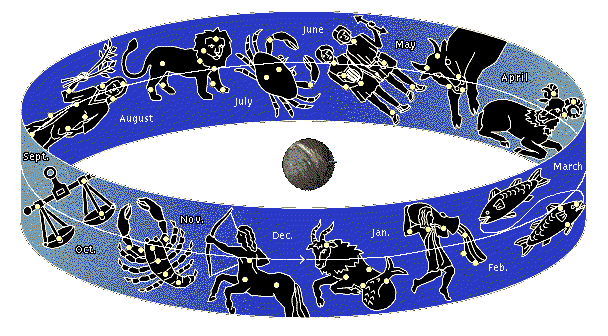
Funk-Hellet’s observation that: “By subtracting the circumference from the height, they obtained 6 cubits in a straight line, which was equal to 1/2 circumference, or the exact value of pi/6.…“ is worth noting when we come to the subject of the celestial symbolism of the Menorah, and its application of pi, building on what we have found here. Funk-Hellet goes on to say that: “the Biblical cubit is equal to the Egyptian Royal cubit, that was incorporated into the Jerusalem Temple as pi/6, or 523.6 mm. Using one unit of measure as the radius of a circle, the ancients found the trigonometric value of 30 degrees to be pi/6, (that divided the full circumference of the circle into 12 equal parts, as the 12 signs of the zodiac are divided into 12/30 degree segments) and was the value of the royal cubit, or .5236 of the unit used: 3.1416/6= .5236“ 14 (parenthesis & emphasis mine)
Figure 2. Solomon’s Temple with Brass Pillars at the Entrance. 15

Brass Pillars at the Entrance of Solomon’s Temple
In effect, we have an architectural representation of the twelve-fold division of the heavens preserved in the dimensions of the Temple’s Brass columns, all based on the mathematical standard Pi, long before most modern scientists imagined the ancients knew anything about Pi at this level of accuracy. This provides more evidence showing the Creator’s perfect wisdom and Nature’s Great Geometer, at work in the dimensions of His Temple, as an illustration of heavenly realities [Heb. 8:5], which He gave to King David by revelation. Also symbolically contained in the dimensions of the Temple’s brass columns, is a figure of 12 calendar months of 30 days, totaling the 360 days of their year, a calendar also used going all the way back to Noah’s time, in the context of the 360-degrees of the ecliptic. This reveals a true origin of the 12 – 30° segments of the ecliptic, as a standard celestial measure, and also reveals the Pi ratio at the root of the Hebrew Calendar matching the 360 degrees of the circle with the 360 days of the year on the Calendar of the Biblical Patriarchs. And since Noah was already 600 years old when the Bible records the details of his luni-solar calendar in Genesis 7, it also implies that it was used by the earlier Biblical Patriarchs prior to the flood, and centuries before history and human science thought this level of sophisticated astronomical timekeeping was in use. For more information on Noah’s Calendar, please check our website link @try-god.com. As we find other Biblical uses of the Hebrew word “qav,” God’s application of the Pi concept far exceeds any previous application in human history. Views based on scientific Materialism will never account fully for the realities of God’s Creation. Only from the Creator’s viewpoint in His Word, and the Works of His Hands, do these applications of pi make sense. Only He could apply pi to the ecliptic and the dimensions of planet Earth, an idea borne out in greater detail, in how pi is symbolically and architecturally applied, not only in the Hebrew Tabernacle and Temple, but moreso in the Great Pyramid, [Fig. 3, below]. Since the pattern shown to Moses for the Tabernacle was by divine revelation, just as the Temple’s pattern was shown to King David, these men of God did not calculate the blueprints for these sacred edifices, or their related measurements, by scientific trial and error. Thus, they didn’t need to wait centuries on the Greeks-like Archimedes, generally considered the greatest of ancient scientists, to rediscover or apply them in divine architecture. Although Archimedes is to be commended for his application of the pi ratio, at his later time in history, respectfully it pales compared to what we find in the Biblical uses of “qav” relating to pi.
Figure 3. Pi Ratio in the Great Pyramid of Giza – Bing images 16.

In Isa. 9:6, one of the great prophecies of the promised seed, it is used of the Messiah as Sar-Shalom, the Prince of Peace, the one who brings peace to all Creation, [Eph. 2:11-18]. The word Sar as the root of saros doubtless linked to the Hebrew word [H8269] of the same spelling, meaning; “ruler, prince, captain, chief, leader, head.”17 The word retained this meaning even in modern usage, as in the Tsar of all the Russias. As a witness linking to the roots of very early human language, Aesar is a word for “God” in both, Icelandic and Irish, Osar in Egyptian like Osiris was the prince. Even the English word “sir” and the Roman “Ceasar” are traceable to this root. It is used in Daniel 10:13 & 20, referring the arch-angel Michael who routed the fallen angel (Daimon), opposing the messenger angel that God sent to answer Daniel’s prayer. The meaning of “sar” is Jesus Christ as the Prince of Peace embodies “the sum of creation, as the prince of Creation.” The most important date on the calendar of Israel then becomes the birthday of Jesus Christ on New Years Day, Tishri 1, 3 BC. Because the Hebrew calendar was lunar based [saros] as to the start of its months, the coordination of the lunar and solar cycles set the basis for the signs marking the birth of Christ. “With every 19 solar years plus 2 hours, the Sun and Moon return to meet each other at the same appointed time and place in the sky. The saros, however being an eclipse lunar cycle, consists of 19 eclipse years, which is only 18 solar years plus eleven days. An eclipse year consists of 346.62 solar days, which is equal to 11.738 full moons. When we divide the saros by 11.738, we get 1.618, (or phi), accurate to 4 digits!”18 This shows us a comparison between 2 lunar cycles (eclipse years & full moons) that harmonize according to the phi ratio. Since the Sun intersects a lunar Node two times every 346.62-day eclipse year, we see how the solar and lunar cycles might also be linked by the phi proportion. As we consider the Calendar of Israel, which unified the luni-solar cycles according to phi, in concert with Israel’s sacred fifty-year cycle of Jubilees, the impact of this pattern in the Natural Order is evident, since there are 618 full Moons in any given 50-year Jubilee cycle.
According to Hislop, The Chaldean version of this word: Zer, meaning “to encompass” gives us not only the English basis for; “Zero signified by a circle among the Chaldeans,” but also Zero; “the seed.”19 It further relates to the Hebrew word “zera” [H2233], used referring to the promised seed in Genesis 3:15. To this end the Chaldean word for the “woman’s promised seed” was Zero-ashta, that also formed the basis of the name Zoroaster. We should note here that the Zoroastrian writings in the Zend-Avesta predicted the return of Zoroaster as a Messianic savior who would renew all existence in preparation for the Last Judgment. These references to the woman’s promised seed point directly to the general sign of the Celestial Prelude. Hislop also notes:
“In many nations, not only was a great god known under the name of Zero or Zer; the seed, and a great goddess under the name of Ashta or Ishta; the woman, but the great god Zero is frequently characterized by some epithet which implies that he is The only One.”20
This evidence provides a strong basis for a direct correlation to Coma, the seed as the desired of the nations, [Hab. 2:7] especially when we view the supernova in this child’s head, as the promised seed, pictured in the woman’s lap in the decan of Coma, as the general sign of the Celestial Prelude. Hislop goes on to say: “As he who by the Chaldeans was regarded as the great Seed was looked upon as the Sun incarnate, and as the emblem of the Sun was a circle, the hieroglyphic relation between zero; “the circle,” and zero; ‘the seed‘ was easily established.”21
The Maya were also familiar with the concept of zero long before it reached Europe through India and the Arab traders. They used a shell shape to symbolize zero, but to them “it was not a symbol for nothing; but it represented completion and the seed from which all could be derived.”22
From the information above we can see related cultural connotations for Sar-zero in the sun, embodied as the promised “great seed” [Mal. 4:2], the ecliptic upon which the sun travels [Psalm 19:4-6], in its course, moon (saros), and the “encompassing” circle, in spite of being separated by culture and time. The history of “zero” from a mathematical viewpoint is interesting in this light, because the Arabs, from whom we have taken it, got it from the Chaldeans. In our modern usage, zero is the absence of quantity, the point where a continuous function changes its sign from positive to negative [or from the physical to spiritual] as in, for example, zero–point energy Physics. From a Biblical viewpoint, this transition between the physical and spiritual realms is embodied in Jesus Christ who is the crown of Creation. As the Word made flesh, seated at the right hand of God at the utmost peak of the cosmos, Jesus gives mankind our only access to the true spiritual side of life that arches over our physical “reality,” [II Cor. 4:18]. As the ideal man and mediator, he embodies the relationship between all humanity on Earth and our Heavenly Father. This becomes more interesting when we consider that, according to ancient Sumerian myth, Sar also symbolized the totality of the cosmos. The Sumerian conception of this was dual, meaning there was an upper totality called An-Sar, and a lower totality known as Ki-Sar. “An” meant heaven, and “Ki” meant Earth to the Sumerians, who believed that originally these two were unified in one place, until circumstances demanded that Earth be set aside for humanity in its fallen state. The Sar was the prince who would once again unify these disparate aspects of Creation resulting from the temptation and fall of man. As we consider the Sumerian cosmos, we find the ancient concept of a layered Celestial Sphere within the great circle of An-Sar that encompasses the lesser ellipses or pillars of the ecliptic, Equator, the planetary; earthly and lunar orbits.
As the high priest after the order of Melchisedek, Jesus inherits his double square breastplate of 12 precious stones, symbolizing the authority of the Lion of the Tribe of Judah as Priest-King over Israel’s 12 [4 x 3] tribes [Ex. 28:15-30]. Keeping with the celestial symbolism theme, the breastplate, was designed with a niche holding the Urim and Thummim, or lights and perfections; representing the two great lights of the Sun and Moon. As oracles of the High Priest, these two stones revealed the wisdom and glory of the Creator, even as the movements of the Sun and Moon in the sky declare God’s glory [Ps. 19:1]. We find more references to these 12 stones and their variants in the living stones of I Pet. 2:4-7.
Another element in understanding the celestial/astronomical implications of these temple pillars, includes the astronomy of the birth of Christ. This is a natural progression from the Kings of Israel, starting with King David and the Davidic Dynasty leading to the promised seed and King of Kings, the apex of this royal spiritual line in Jesus Christ.
Other notable researchers have acknowledged the correlation of Rosh Hashanah not only at the Birth of Christ on Sept. 11th, 3 BC, but also as his birth relates to his victorious return as King of Kings and Lord of Lords, with the Rev. 12 heavenly birth signs replaying in 2017 and beyond, in light of the Biblical Archaeo-Astronomy of the Great Pyramid. The principal on the Signs of the End web- site is; Daniel Matson, @[http://watchfortheday.org/signsoftheend/giza2024.html]. 23
He broached this topic with the question; “Could Rosh Hashanah be the real factor? His basic idea is that the pyramid complex is a map of the heavens of a point in time when Christ returns. The pyramids show what is to be at meridian (Al Nitak in Orion), taking into account the causeways heading east from the pyramids, showing the importance of the rising sun or other items rising in the east. That the Sphinx also looks to the east is a factor as well. The point though was to see when a candidate for an alignment of Rosh Hashanah and the meridian alignment of Orion at dawn.”24
An earlier version of this was realized in the Great Pyramid’s Rosh Hashanah alignment of 2017,
As we have posted in numerous blog studies, the heavenly signs marking the birth of Christ seen in Rev. 12 will also mark his victorious return, and we have documented how the heavenly signs in the 2014-2015 Blood Moon Tetrad and the signs leading up to the 2017 fall equinox, established this truth. However, the 2017 alignment was not alone as a possible marker for Christ’s Return. The next alignment of this type is coming in 2028, when dates for Rosh Hashanah may match the sky picture of signs as described in Rev. 12. In 2017 Matson showed a key relationship between the Christ Angle of the Great Pyramid and the Rosh Hashanah date starting-sundown on Sept. 20th-21st, 2017, two days before the Feast of Trumpets on 9-23-2017. As Matson said, “this was the first year from when he marked Rosh Hashanah coming immediately after Sept. 20th—the time Al Nitak hits the meridian precisely at dawn, and also when Regulus hits the Christ angle.”25 Thus, the Christ angle not only bisects Bethlehem as a prophecy of Christ’s birth, but it also bisects Regulus as in 2017, at this point in time again in 2028, as a potential time of his Return.
The Sept. 20th alignment of Venus-Regulus related to the Great Pyramid, is seen in Fig. 4 below.
Figure 4. Great Pyramid Passage Alignments on Rosh Hashanah 2017. 26
Signs of the End – The Oracle in Stone
Here the passages of the Great Pyramid according to the Christ Angle, map out the signs of the
Celestial Sphinx, as Regulus and Venus are aligned in Leo the Lion, while Jupiter is in Virgo.
The first clincher here is that on Rosh Hashanah-2017, Venus the bright and Morning Star is in
conjunction with Regulus at dawn, aligned with the Christ Angle, visible above the horizon. Second, below the horizon is Jupiter–called the “scepter” in [Num. 24:17], as King planet of the Jews, is positioned equi-distant via the Christ angle to Regulus & Venus above the horizon. The dawn Venus–Regulus union reminds us of the testimony of the Apostle Peter;
2 Peter 1:19-
And so we have the prophetic word confirmed, which you do well to heed as a light that shines in a dark place, until the day dawns and the morning star rises in your hearts; knowing this first, that no prophecy of Scripture is of any private interpretation, for prophecy never came by the will of man, but holy men of God spoke as they were moved by the Holy Spirit.
In Fig. 5 below the Christ angle in the Ascending Passage of the Great Pyramid is aligned with the Venus-Regulus union in Leo, the Lion of the tribe of Judah. The key note here is the star Regulus, the brightest star on the ecliptic, is located at the heart of Leo, and when this glorious dawn of the sixth administration breaks, the Morning Star Jesus Christ arises in our hearts, enlightening us for eternal glory, as we are raptured with Christ to God’s own right hand, forever. The 2nd part of this Pyramid alignment on Rosh Hashanah, when Al Nitak hits the meridian precisely at dawn, extending through the Pyramid’s apex, to the star Al Nitak on Orion’s Belt. The apex and chief cornerstone of the Great Pyramid itself is also the subject of numerous messianic prophecies [Ps. 118: 22] where the stone rejected by the builders has become head of the corner, or the chief cornerstone. This 5th cornerstone of the Great Pyramid sits atop the superstructure of the Great Pyramid, unifying the four cornerstones at the Pyramid’s base, into the spiritual body of Christ’s Church, [Eph. 2:20]. This would activate the celestial image of the Great Pyramid, to unify the capstone with the body of the Great Pyramid, as a prophecy of Christ’s return FOR his saints.
The Almighty has provided many examples from History and Nature, not to mention countless Biblical miracles confirming His Prophetic Word, in the dual witness of Biblical Archaeo-Astronomy, of the Great Pyramid providing excellent depictions of this verse with Venus the Morning Star aligned in the King Star Regulus at dawn on Rosh Hashanah, Sept. 21st, 2017, according to the measures of the Great Pyramid’s Ascending/ Descending passages, [Fig. 5 below]. If indeed these heavenly signs are pointing to The Dawn of The Day of the Lord’s Return FOR his Saints in 2028, then it will truly be the dawn of a New Day and Age of Everlasting Righteousness in the Lord Jesus Christ.
Figure 5. The Great Pyramid’s Ascending Passage alignment with the Venus-Regulus union in Leo, 9-20-2017. 27

This view of the prophecy of the Great Pyramid in its Ascending and Descending Passage angles agrees with what Scriptures say about the witness of the Great Pyramid in Isaiah 19:19-20. What is evident from this graphic [Fig. 4] is the key role of the planets Jupiter and Venus in marking the Birth and 2nd Coming of the Lord. Historically, ancient Pyramid researchers have made key observations concerning the dimensions and symbolism of the only ancient world wonder still intact. Scholars from Herodotus to Agatharchides of Cnidus in the 2nd Cent. BC, emphasized mathematical and geometric principles governing the building and conception of the Pyramid complex on the Giza Plateau, as opposed to their specific measures. A modern scholar, Livio Stechini in analyzing the past work of Pyramid researchers, has focused on the meridian triangle of the Great Pyramid, which provided precise values of both the Pi and Phi ratios, in the four triangular faces of the Great Pyramid. Agatharchides found dimensions for two of the meridian sections of the Pyramid based on Pi, with the other 2 triangle sections based on Phi.28 As we may recall from our High School Geometry class, Pi resolved the circle’s relationship between its diameter and circumference. In Sacred Geometry, a spiritual view of geometric principles is held, where the Circle symbolizes the Eternal Creator [Elohim], while the Diameter embodies God as Jehovah in relationship with His Creation. Jehovah is seen reaching out to humanity in His only begotten Son, where Jesus as the diameter line, links the center–point; [Man–creation] to the Creator seen as the eternal Circle, outside of Creation. So Christ is the perfect mediator between God and Man, [I Tim. 2:5].
Rosh ha-Shanah on Tishri 1, was the “head” of the Judean calendar as New Year’s day and Jesus’ birth-day, the first day of the 50–year Hebrew cycle of Jubilees. This set a foundational temporal pattern of the seasons, holidays and feasts of Israel’s sacred calendar.
During the “Great Wonder” of Rev. 12:1, the feet of the woman, Virgo fall at the intersection of the ecliptic and the Celestial Equator, which is also known as the autumnal equinox, one of the so-called four “pillars of heaven,” the four Cardinal Directions of the horizon. This celestial point was generally marked on the Hebrew calendar by the Feast of Tabernacles, which occurred later during this Sabbath of Months. V.P. Wierwille refers to the significance of Tishri 1 the seventh month, with the following:
“Just as age was reckoned from Tishri 1 to Tishri 1, so were the regnal years of Judean Kings. The blowing of trumpets of Rams Horns was also part of the coronation ceremony of these Judean Kings.” 29
We find added evidence for this in the star cycle of Sirius, as a symbol embodying a dual-nature of the Morning Star. Its fallen archaic nature is seen in Lucifer, the first Morning Star [Isa. 14:12], while the risen nature is seen in Christ [Rev. 22:16]. This becomes more intriguing when we look at aspects of the stellar mythos of the star cycles of Sirius A & B, of the African tribe called the Dogon.
The Dogon celestial mythology says the cycle of Sirius “B,” a White Dwarf companion star in joint orbit with Sirius “A“, is a 50-year cycle, a fact verified by modern astronomers. Thus, it is instructive to see how half the fifty-year cycle of Sirius “B“ exhibits the luni-solar kinship inherent in the 50-year cycle of Hebrew Jubilees, according to the golden section, or phi ratio. This key to the celestial coordination of the luni-solar cycle, along with the star cycle of Sirius as the three main calendars referred to in Gen. 1:14-16. Since the sidereal Sirius year, or Sothic Calendar as the Greeks called it, requires a highly advanced knowledge of the heavens, capable of selecting the lone star in the sky that dictates a year-365¼ days long, we find more support for these advanced astronomical practices about 1000+ years prior to Abraham, in ancient Egypt.
Although the historical correlation of the 50-year Jubilee and the 50-year Sothic cycle is unsettled, we have seen the Jubilee cycle is central to the timing of Christ’s birth, and stands out in the celestial events making up the great wonder of Rev. 12. According to Schwaller de Lubicz, who broke down the 50-year Sothic cycle into two 25 year cycles: says a twenty-five year cycle corresponds to 309 lunations. The calculations are:
25 x 365 = 9125 days, and
9125 = 29.5307 days per lunation in 309 lunations
This in itself reveals extremely accurate observations. Modern Astronomy reckons the lunation as 29.53059 days, a difference of about a second. But Schwaller de Lubicz notes the intriguing equivalence of twenty-five years to 309 lunar months. 309 = (Ø -1 x 1000 and its choice as the number determining the cycle cannot have been accidental. 2
( Ø – 1 x 1000.)=618. A double cycle comprising 50 years; expresses the Golden Section. 30
2
Thus the inception of Jesus’ reign as King of Kings is marked on his birthday of Tishri 1, the “Day of Trumpets.” The significance of the king’s coronation tied to Rosh Hashannah, New Year’s Day and the head of Israel’s calendar, is that Christ is the King of Kings presiding over all temporal, civil and sacred matters as the King-High Priest of Israel. Thus, his birth on this key day of the calendar was foreordained by God, from before the foundations of the world. An example of this coronation tradition in the kingdom of Israel can be seen in II Kings 11:
2 Kings 11:12-14
And he brought forth the king’s son, and put the crown upon him, and gave him the testimony; and they made him king, and anointed him; and they clapped their hands, and said, God save the king. [13] And when Athaliah heard the noise of the guard and of the people, she came to the people into the temple of the Lord. [14] And when she looked, behold, the king stood by a pillar, as the manner was, and the princes and the trumpeters by the king, and all the people of the land rejoiced, and blew with trumpets: and Athaliah rent her clothes, and cried, Treason, Treason.
The figure Polysyndetyn is evident in 2 Kings above as seen with the use of many “ands” separating the steps of the king’s coronation, starting with bringing forth the king’s son in v. 12, and concluding with the blowing of trumpets, and Athalia tearing her clothes and crying Treason as the 13th step of rebellion in v.14, resulting in her death.
The chronological alignment that we are recognizing with regards to the regnal years of Judean kings, calculated from New Years Day, Rosh ha-Shanah on the Hebrew Calendar, from Tishri 1 to Tishri 1, that coincides with the birthday of Jesus Christ is established in a celestial coronation ceremony of the promised seed, with the triple planetary union of Jupiter-Regulus following Christ’s birth in 3 BC. In the Book of Kings, Jesus is the King’s son, in the Red Thread title, that unveils each book in God’s Word according to the ministry of Christ. These steps recorded in the king’s coronation here in II Kings 11:12-14, start with the king being brought forth, the ninth of which is “the king stood by a pillar, as the manner was.” Verse 13 above notes that the coronation ceremony took place in the Temple of the Lord, which is logical since the king was ordained and anointed of God. Below we find the celestial rendition of Christ’s Coronation, with the first of 3 unions of Jupiter, the King planet and Regulus the king star, in 3-2 BC. In Fig. 6 below, the path of Jupiter from Sept. 3 BC to Nov. 2 BC is depicted as Jupiter crowns Regulus. This involves the coordination of the luni-solar, planetary and star cycles all synched in honor of the prophesied appearance of the promised seed, God’s only begotten Son, Jesus Christ, the King of kings.
Fig. 6. The Triple conjunction of Jupiter and Regulus on Sept. 14th 3 BC. 31

In the Astronomy of the Birth of Christ, we also found a series of at least 7 lunar occultations of Regulus, signifying the serpent’s efforts to obstruct the purposes of God in the time of Christ’s birth. There is evidence that these lunar activities marked the workings of the serpent’s seed in bringing about death and destruction. This dark lunar symbolism relates to the Moon’s eclipse cycle resulting in the recurrent lapse of the Sun’s life-giving light. In the final analysis however, persecution by the adversary does not directly hinder the movement of God’s Word, it only will ultimately assist in its abundant dispersion.
II Chronicles 23:3-11 shows us this record in greater detail.
3 Then all the assembly made a covenant with the king in the house of God. And he said to them,“Behold, the king’s son shall reign, as the Lord has said of the sons of David. 4 This is what you shall do: One-third of you entering on the Sabbath, of the priests and the Levites, shall be keeping watch over the doors; one-third shall be at the king’s house; and one-third at the Gate of the Foundation. All the people shall be in the courts of the house of the Lord. 6 But let no one come into the house of the Lord except the priests and those of the Levites who serve. They may go in, for they are holy; but all the people shall keep the watch of the Lord. 7 And the Levites shall surround the king on all sides, every man with his weapons in his hand; and whoever comes into the house, let him be put to death. You are to be with the king when he comes in and when he goes out.”
8 So the Levites and all Judah did according to all that Jehoiada the priest commanded. And each man took his men who were to be on duty on the Sabbath, with those who were going off duty on the Sabbath; for Jehoiada the priest had not dismissed the divisions. 9 And Jehoiada the priest gave to the captains of hundreds the spears and the large and small shields which had belonged to King David, that were in the temple of God. 10 Then he set all the people, every man with his weapon in his hand, from the right side of the temple to the left side of the temple, along by the altar and by the temple, all around the king. 11 And they brought out the king’s son, put the crown on him, gave him the [a]Testimony, and made him king. Then Jehoiada and his sons anointed him, and said, “Long live the king!”
Death of Athaliah
12 Now when Athaliah heard the noise of the people running and praising the king, she came to the people in the temple of the Lord. 13 When she looked, there was the king standing by his pillar at the entrance; and the leaders and the trumpeters were by the king. All the people of the land were rejoicing and blowing trumpets, also the singers with musical instruments, and those who led in praise. So Athaliah tore her clothes and said, “Treason! Treason!”
2Kgs. 23:3, the king stood by a pillar at the Temple’s entrance in the 13 steps of his coronation. As Ezek. 17:14, tells us, if the king kept God’s Covenant, the kingdom would stand, explaining why the coronation ceremony was held in the Temple where God’s name dwelt.
2 Chronicles 23:13-15
[13] And she looked, and, behold, the king stood at his pillar at the entering in, and the princes and the trumpets by the king: and all the people of the land rejoiced, and sounded with trumpets, also the singers with instruments of musick, and such as taught to sing praise. Then Athaliah rent her clothes, and said, Treason, Treason. 14 And Jehoiada the priest brought out the captains of hundreds who were set over the army, and said to them, “Take her outside under guard, and slay with the sword whoever follows her.” For the priest had said, “Do not kill her in the house of the Lord.”
15 So they seized her; and she went by way of the entrance of the Horse Gate into the king’s house, and they killed her there.
The Trumpets that accompanied the King’s coronation ceremony on Rosh Hashanah in v.13 above, are very appropriate to the pomp and circumstance of the occasion. There has been conjecture as to the meaning of this pillar or column [H5982-ammud=Judg. 16:25-26, I Kgs. 7:2, pillar of cloud, Ex. 33:9-10, and the pillar of fire in Ex. 13:22. Also used of pillars of heaven in Job 26:11 and pillars of the earth, Job 9:6-7. Job here mentions the earthly pillars in the same breath as the sun not giving its light, along with the stars being sealed up. The earth’s seasons of winter, spring, summer and fall, located at the equinoxes and solstices, are called the earthly pillars. [2.] a Platform or scaffold; where the King stood by his pillar; 2 Kgs. 11:14, 23:3.
The record in 2 Chron. 23 puts this “pillar at the entering in,” and if the entrance of the temple is meant, it refers to the Temple’s large pillars of brass called Jachin and Boaz. This agrees with the New Bible Dictionary which states: “The entrance to Solomon’s Temple was flanked by 2 huge bronze pillars of key significance, [I Kgs 7:15-22]. They were thought to indicate the divine presence as the pillars of fire and cloud in Ex. 33:9, Deut. 31:15. It was apparently by one of these that the king stood on ceremonial occasions, [2 Kings 23:3, 2 Chron. 23:13].”32
In II Chron. 34:31, King Josiah stood in his place (H5977–omed) and made a covenant before the Lord to keep His commandments. The word translated “place” has the same Hebrew root [H5975–amad] as the word “pillar” above.
1 Kings 7:21 And he set up the pillars in the porch of the temple: and he set up the right pillar, and called the name thereof Jachin: and he set up the left pillar, and called the name thereof Boaz.
Thus, as the kings of Israel stood in their place, by their pillar in the temple during the king’s
coronation ceremony, so the coronation of the King of kings, seen in the stellar heralding of his birth, was also marked by one of the four celestial pillars of heaven. At this center point in history, near the autumnal equinox, with the Moon at the feet of Virgo, with the setting of the star Spica-Al Zemach, the moments of the birth of Jesus Christ were framed in the heavens. This was followed 3 days later by the first union of a triple planetary coronation with first
Jupiter-Regulus Conjunction in Leo.
Fig. 7. The Scene at Sunset on 9-11-3BC with the Sun in Virgo with the Moon at her Feet.33

This graphic marks the scene described in Rev. 12 with “the woman [Virgo] clothed with the sun, and the Moon at her feet. The Moon also happens to mark the autumnal equinox, with the crossing of the Celestial Equator and the Ecliptic or path of the Sun. This picture represents the view from Jerusalem on Sept. 11th, 3, BC, at sunset at 6:18pm, and moonset at 7:39pm, as the Sun and Moon frame the setting of the Star Spica which marked the birth time of the Messiah Jesus Christ. 34
This reference to the Feasts of Tabernacles and Passover in the pillar’s chapiters dividing the year in half according to the sacred calendar, remind us of the relation of the luni-solar year that is evident in the cycle of Jubilees. The Feast of Tabernacles was the third of the great annual feasts of the Hebrew sacred calendar, beginning on the fifteenth of the month, which was the height of the full Moon. It determined the start, and closed the annual sacred cycle of the Sabbatical year and the agricultural year, while also marking the change of seasons. Coming during the seventh or most sacred month with its Moon at full strength, shows us another stamp of seven in the temporal order of this feast. Edersheim comments on the significance of the number seven in his book The Temple, where he states:
“What the seventh day, or sabbath was to the week, the seventh month seems to have been to the year.” 35
Thus it would follow that, as Pentecost was to Passover in that it followed it by fifty days (7×7+1), so the Jubilee followed in years. Leviticus 25:8 relates the “seven Sabbaths of years” to the 50th year of the Jubilee, which fell on the Day of Atonement, or the tenth day of the holiest 7th month of Tishri. In the same way that liberty was proclaimed in the Jubilee, throughout all the land and to all its inhabitants [Levi. 25:10], so Jesus set at liberty them that were bruised, while proclaiming the acceptable year of the Lord at the opening of his ministry. This is interesting when we observe that there are thirty Jubilees that bring us from the Exodus to the opening of Christ’s ministry, when opening the scroll to Isa. 61:2, he certified the “acceptable year of the Lord” in a 7-fold prophecy, (Lk. 4:18-21).36 This fits neatly with the truth that in fulfilling the O.T. Law as the embodiment of the Passover male lamb of the first year [Exod. 12:5), Jesus was in the first year of his manhood according to Hebrew reckoning, beginning at 30 years old. During this specific period of 70 weeks; [Dan. 9:24] decreed by God as the period to fulfill this Messianic redemption wherein he ministered to Israel, he was crucified, resurrected, & ascended, exploding the myth that his ministry lasted till he was thirty-three.
In summary, the January Blog of 2023 has illustrated how the potential eclipse of Joshua’s Long Day relates to the luni-solar cycle through the eclipse cycle and even the lunar occultations of Regulus,
to highlight Biblical Astronomy keys of the coronation of the King of kings. Behind it all, we find
God’s mighty Hand guiding us in our search for Biblical truth, continuing to inspire us as we uncover invaluable nuggets along our ultimate path to being seated in Christ at God’s right hand, according to His eternal purposes.
God Bless!
Rene’
Footnotes
1. January 2017 Hebrew Journal Beyt Mikra by physicist Ḥezi Yitzḥak, Bible scholar;
Daniel Weinstaub, and archeologist Uzi Avner.
2. IBID.
3. Plate 1. Picture Credit, (courtesy of the NASA website)
4. January 2017 Hebrew Journal Beyt Mikra by physicist Ḥezi Yitzḥak, Bible scholar;
Daniel Weinstaub, and archeologist Uzi Avner.
5. IBID.
6. Gesenius Hebrew–Chaldee Lexicon- H5975:amad.
7. IBID, 5976–amad.
8. January 2017 Hebrew Journal Beyt Mikra by physicist Ḥezi Yitzḥak, Bible scholar;
Daniel Weinstaub, and archeologist Uzi Avner.
9. IBID.
10. IBID.
11. Gesenius Hebrew–Chaldee Lexicon- 5977-omed.
12. IBID, H5982-ammud.
13. A History of Pi, p. 16, Petr Beckmann.
14. Secrets of the Great Pyramid, Peter Thompkins, p. 263
15. Fig. 2, picture credit. Solomon’s Temple with Brass Pillars at the Entrance.
[alaymanlooksattheword.blogspot.com]
16. Figure 3. picture credit from Bing images; Pi Ratio in the Great Pyramid of Giza.
17. Strong’s Concordance; H8269-saros, James Strong.
18. Sun, Moon and Earth. Robin Heath, p.28
19. The Two Babylons Hislop, p. 59
20. IBID Hislop, p. 18
21. IBID.
22. Serpent in the Sky J..A. West, p. 94.
23. http://watchfortheday.org/signsoftheend/giza2024.html
24. IBID.
25. IBID.
26. IBID, Signs of the End – The Oracle in Stone.
27. Fig. 5 Picture credit. [endtimesforecaster.blogspot.com]
28. Secrets of the Great Pyramid, Peter Thompkins, p. 374-375.
29. Jesus Christ our Promised Seed, American Christian Press, VP Weirwille
30 Serpent in the Sky J..A. West, ppg. 94-95.
31. Fig. 6 picture credit, Jesus Christ our Promised Seed, p. 61, American Christian Press.
32. New Bible Dictionary, ppg. 544-545, Tyndale House Publishers.
33. Fig. 7 picture credit, Jesus Christ our Promised Seed, p. 70-71, American Christian Press.
34. IBID, p. 70.
35. The Temple. Alfred Edersheim
36. IBID
Comments on Facebook
To those of you interested in commenting on this post please go to our Facebook Group Page
https://www.facebook.com/groups/bibleastronomy